
Cedar and redwood decision guide
Cedar vs Coastal Redwood for Outdoor Projects
Neither cedar nor Coastal Redwood is the right pick for every outdoor project. Both are naturally decay-resistant softwoods used outdoors, so the right choice depends on the project, the look you want as the wood ages, how much upkeep you plan to do, the exposure it will face, and how the piece is built.
Western redcedar and Coastal Redwood both have heartwood that is rated resistant to very resistant to decay. From there, the practical differences that matter to a buyer are appearance, how each ages if left unfinished, the finish and upkeep you choose, heat and moisture in real conditions, and how the species maps to paneling, slabs, or furniture.
By Yori, Fresno Forest Creations | Published | Updated and reviewed
Start with your project
Start with what you are building
Neither wood is a universal winner, so the quickest way to choose is to start from the project. Find what you are building below, then weigh the look you want, how it will weather, its exposure, your finish and upkeep plan, and what material is actually available.
If you are building
Paneling or custom cuts
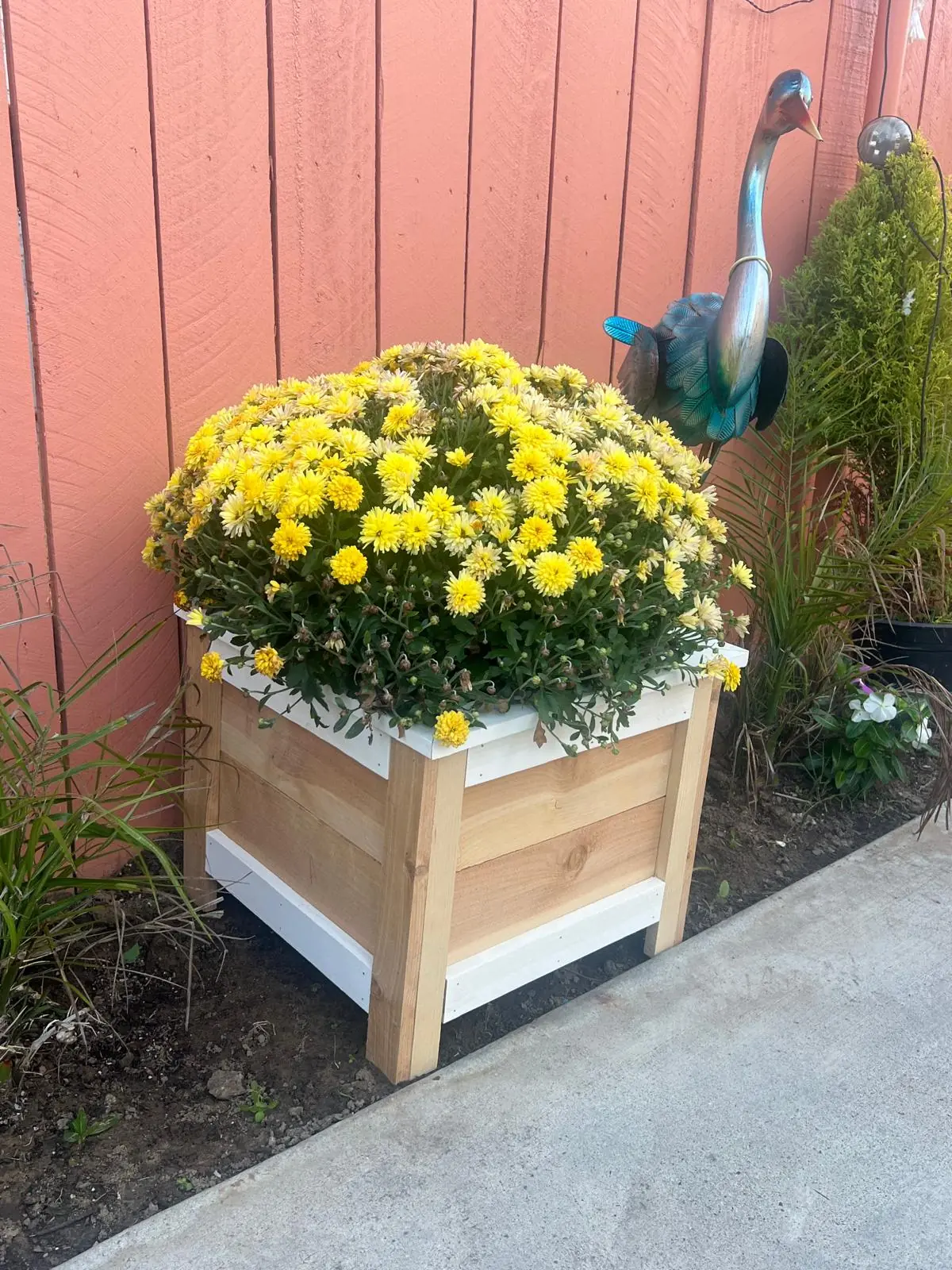
Cedar is a listed option for tongue-and-groove paneling, and for beams and dimensional or custom-cut lumber, with the exact material confirmed for your request.
If you are building
A live-edge slab
Coastal Redwood is a named live-edge slab species where available. Slab options are offered as availability allows, not promised as constant stock.
If you are building
Outdoor furniture
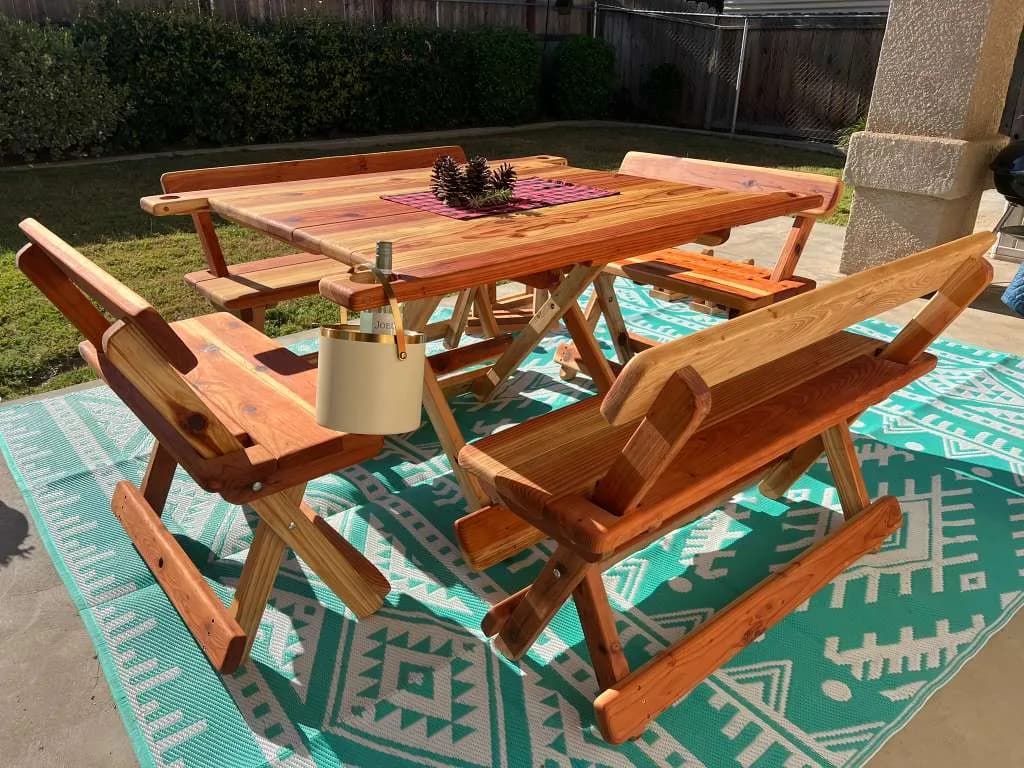
Finished outdoor furniture in the handcrafted Michael Frazier Collection is made from Coastal Redwood.
Still deciding? The full comparison below weighs decay resistance, appearance, weathering, finish, heat, and upkeep side by side. Jump to the comparison.
The short version
For tongue-and-groove paneling, cedar is a listed material option. Cedar is also listed for beams and custom-cut lumber, with availability confirmed for the request. For a live-edge slab, Coastal Redwood is a named option where available, and it is the material used for Michael Frazier Collection outdoor furniture.
Both species have naturally decay-resistant heartwood, but that rating is not a service-life promise and both require maintenance. The choice is less about declaring one wood stronger and more about the look you want, the upkeep you will actually do, and the kind of project you are building.
How cedar and Coastal Redwood compare
The table below compares the two species on the points that matter to an outdoor buyer. The decay, stability, and color rows come from published species fact sheets, while the weathering and finish rows follow the USDA Wood Handbook. Heat and maintenance choices remain project-dependent because outcomes vary with color, finish, exposure, construction, and upkeep.
| Consideration | Cedar (western redcedar) | Coastal Redwood |
|---|---|---|
| Natural decay resistance (heartwood) | Rated resistant to very resistant | Rated resistant to very resistant |
| Where the resistance lives | In the heartwood; the sapwood is not decay-resistant | In the heartwood; the sapwood is not decay-resistant |
| Weight and stability | Light in weight, low shrinkage, dimensionally stable | High dimensional stability, resists warping |
| Color | Reddish or pinkish brown to dull brown heartwood, nearly white sapwood | Darker reddish-brown heartwood, white sapwood |
| If left unfinished | Commonly shifts toward a gray tone over time; how evenly depends on exposure | Commonly shifts toward a gray tone over time; how evenly depends on exposure |
| To keep warmer tones | Clean and reapply a finish or oil periodically; finishes are not permanent | Clean and reapply a finish or oil periodically; finishes are not permanent |
| Summer heat to the touch | Depends on color, finish, and exposure; no heat advantage is established for either species | Depends on color, finish, and exposure; no heat advantage is established for either species |
| Best-fit Fresno Forest Creations use | Tongue-and-groove paneling; beams and custom cuts subject to confirmation | Live-edge slabs where available, and handcrafted Michael Frazier Collection furniture |
| Maintenance reality | Naturally decay-resistant heartwood is not maintenance-free | Naturally decay-resistant heartwood is not maintenance-free |
How cedar and Coastal Redwood compare across outdoor-project considerations
Natural decay resistance (heartwood)
- Cedar (western redcedar)
- Rated resistant to very resistant
- Coastal Redwood
- Rated resistant to very resistant
Where the resistance lives
- Cedar (western redcedar)
- In the heartwood; the sapwood is not decay-resistant
- Coastal Redwood
- In the heartwood; the sapwood is not decay-resistant
Weight and stability
- Cedar (western redcedar)
- Light in weight, low shrinkage, dimensionally stable
- Coastal Redwood
- High dimensional stability, resists warping
Color
- Cedar (western redcedar)
- Reddish or pinkish brown to dull brown heartwood, nearly white sapwood
- Coastal Redwood
- Darker reddish-brown heartwood, white sapwood
If left unfinished
- Cedar (western redcedar)
- Commonly shifts toward a gray tone over time; how evenly depends on exposure
- Coastal Redwood
- Commonly shifts toward a gray tone over time; how evenly depends on exposure
To keep warmer tones
- Cedar (western redcedar)
- Clean and reapply a finish or oil periodically; finishes are not permanent
- Coastal Redwood
- Clean and reapply a finish or oil periodically; finishes are not permanent
Summer heat to the touch
- Cedar (western redcedar)
- Depends on color, finish, and exposure; no heat advantage is established for either species
- Coastal Redwood
- Depends on color, finish, and exposure; no heat advantage is established for either species
Best-fit Fresno Forest Creations use
- Cedar (western redcedar)
- Tongue-and-groove paneling; beams and custom cuts subject to confirmation
- Coastal Redwood
- Live-edge slabs where available, and handcrafted Michael Frazier Collection furniture
Maintenance reality
- Cedar (western redcedar)
- Naturally decay-resistant heartwood is not maintenance-free
- Coastal Redwood
- Naturally decay-resistant heartwood is not maintenance-free
What “naturally decay-resistant” really means
Natural decay resistance is not spread evenly through a log. In both cedar and redwood it lives in the heartwood, the darker wood near the center. The sapwood, the lighter wood near the outside, does not carry the same natural resistance.
That is why naturally decay-resistant wood is still not maintenance-free. Using the heartwood matters, and every outdoor piece benefits from care over time. Decay resistance is a rating for the heartwood, not a promise about how long a finished piece will last.
How each ages, and your two honest choices
Left unfinished outdoors, both species tend to shift toward a gray tone over time as they take sun and repeated wetting and drying. Many people like that weathered look. How evenly it happens depends on how much sun and moisture each surface gets, so a piece can gray unevenly.
If you want to keep more of the warm red and amber tones, the other honest choice is to clean the wood and reapply a finish or oil from time to time. Finishes are not permanent, so keeping the warm color is an ongoing upkeep choice rather than a one-time step. Either direction can look right; the difference is how much upkeep you want to sign up for.
Heat and moisture in Central Valley sun
In Central Valley summers, a common question is whether an outdoor wood surface gets too hot to touch. How hot any surface feels depends on its color, its finish, and how much direct sun it gets, so a dark oiled surface in full sun behaves differently from bare wood in shade.
The sources here do not establish a heat advantage for either cedar or Coastal Redwood over the other. Treat touch temperature as something driven by color, finish, and exposure rather than by the species name, and plan shade and placement for any material that sits in full afternoon sun.
Which fits your project?
For tongue-and-groove paneling, ceilings, and accent walls, cedar is one of the listed material options. Cedar is also listed for beams and dimensional lumber or custom cuts, with the exact option confirmed for the request. For other outdoor work, describe the project so the shop can confirm material fit rather than assuming availability.
For a live-edge slab, Coastal Redwood is a named slab species where available. For finished outdoor furniture, Coastal Redwood is the material of the handcrafted Michael Frazier Collection that Fresno Forest Creations represents in Central California. Redwood slab and lumber options are offered where available rather than promised as constant stock.
What to send for an accurate quote
Whichever way you lean, the same details make a request useful: what you are building, the material or look you want, rough sizes and quantity, your city for pickup or delivery, your timeline, and any photos or sketches. The quote-preparation guide walks through what makes any request complete.
Sending details does not confirm price, availability, or that a specific piece is a fit. It starts a conversation so Fresno Forest Creations can review the project and follow up. For first-hand context on each material, Yori has written about working with cedar and with Coastal Redwood.
First-hand perspective
Yori's take on each wood
These two articles share Yori's personal point of view on working with each material. They are not neutral technical verdicts. The sourced comparison above is the balanced reference.
Yori's point of view
Yori's personal perspective on working with cedar outdoors.
Read Yori on cedar for outdoor projectsYori's point of view
Yori's personal perspective on Coastal Redwood furniture.
Read Yori on Coastal Redwood furniture
Optional depth
Source-backed buyer guide
How this guide is supported
- Published
- Last updated
- Last reviewed
The species properties in this guide come from USDA Forest Products Laboratory technical fact sheets for western redcedar and redwood and a Penn State Extension article on heartwood. Weathering and exterior-finish guidance comes from the USDA Wood Handbook, with exact sections noted. Decay resistance is a heartwood rating, not a service life, and no fixed maintenance interval or cedar-versus-redwood heat advantage is claimed. Price, availability, and what fits a specific project are confirmed only after the shop reviews a request.
Exact sources
- 1. Wood Technical Fact Sheet: Thuja plicata (Western Redcedar) by USDA Forest Service, Forest Products Laboratory, Durability and Physical description sections.
- 2. Wood Technical Fact Sheet: Sequoia sempervirens (Redwood) by USDA Forest Service, Forest Products Laboratory, Durability, Dimensional stability, and Uses sections.
- 3. What Is Heartwood in Trees? by Penn State Extension, Decay Resistance section.
- 4. Wood Handbook: Wood as an Engineering Material, Chapter 16, Finishing of Wood by USDA Forest Service, Forest Products Laboratory, Weathering, pages 16-11 to 16-12; Weathered Wood as Natural Finish, page 16-16; exterior-finish maintenance, page 16-18.
Related resource